What Flying Teaches a Photographer - Part 1 - The Pilot
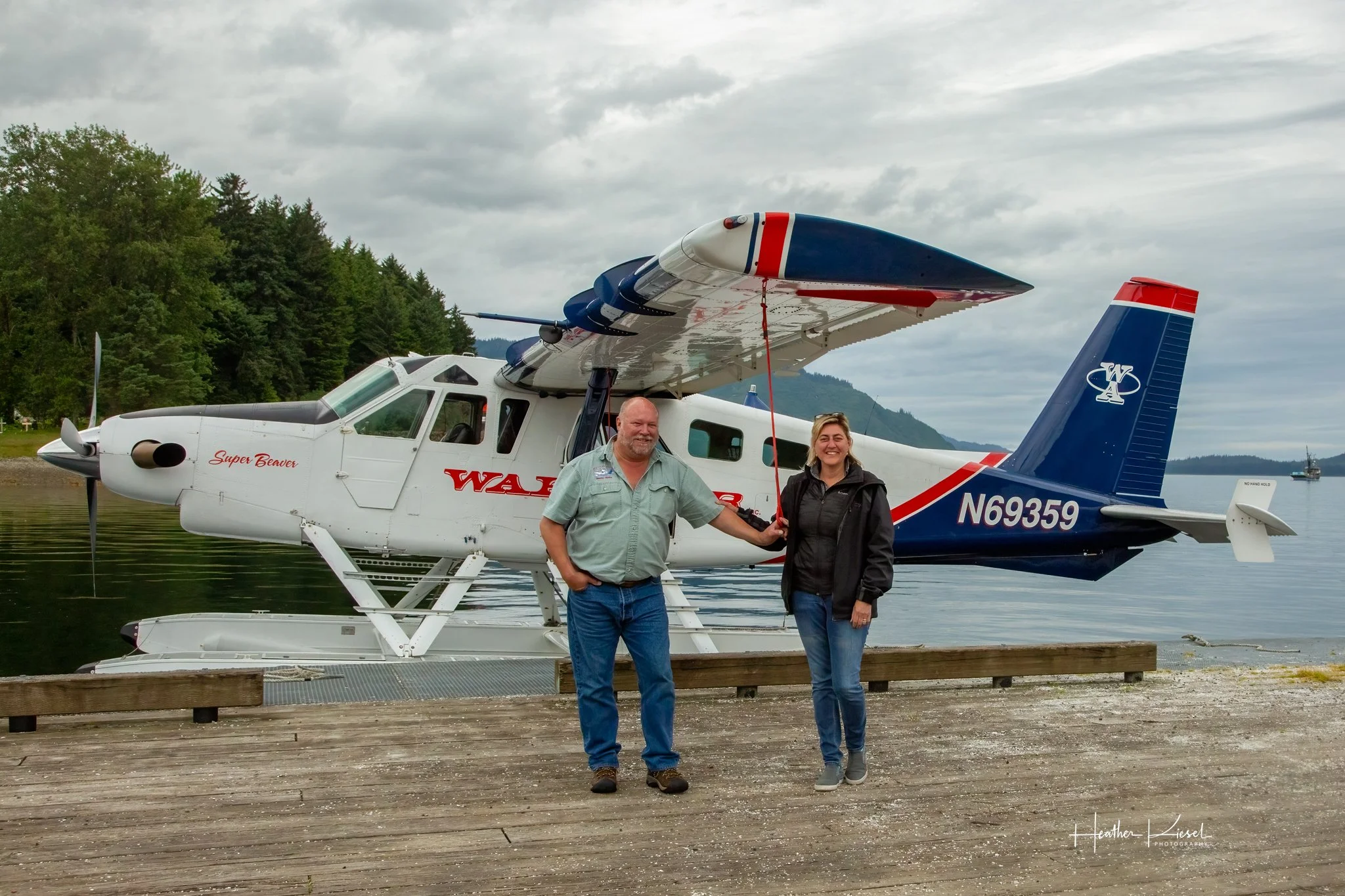
A girl, a guy, and a plane- still flying the way Alaska has always been
flown.
The day doesn’t begin with a camera.
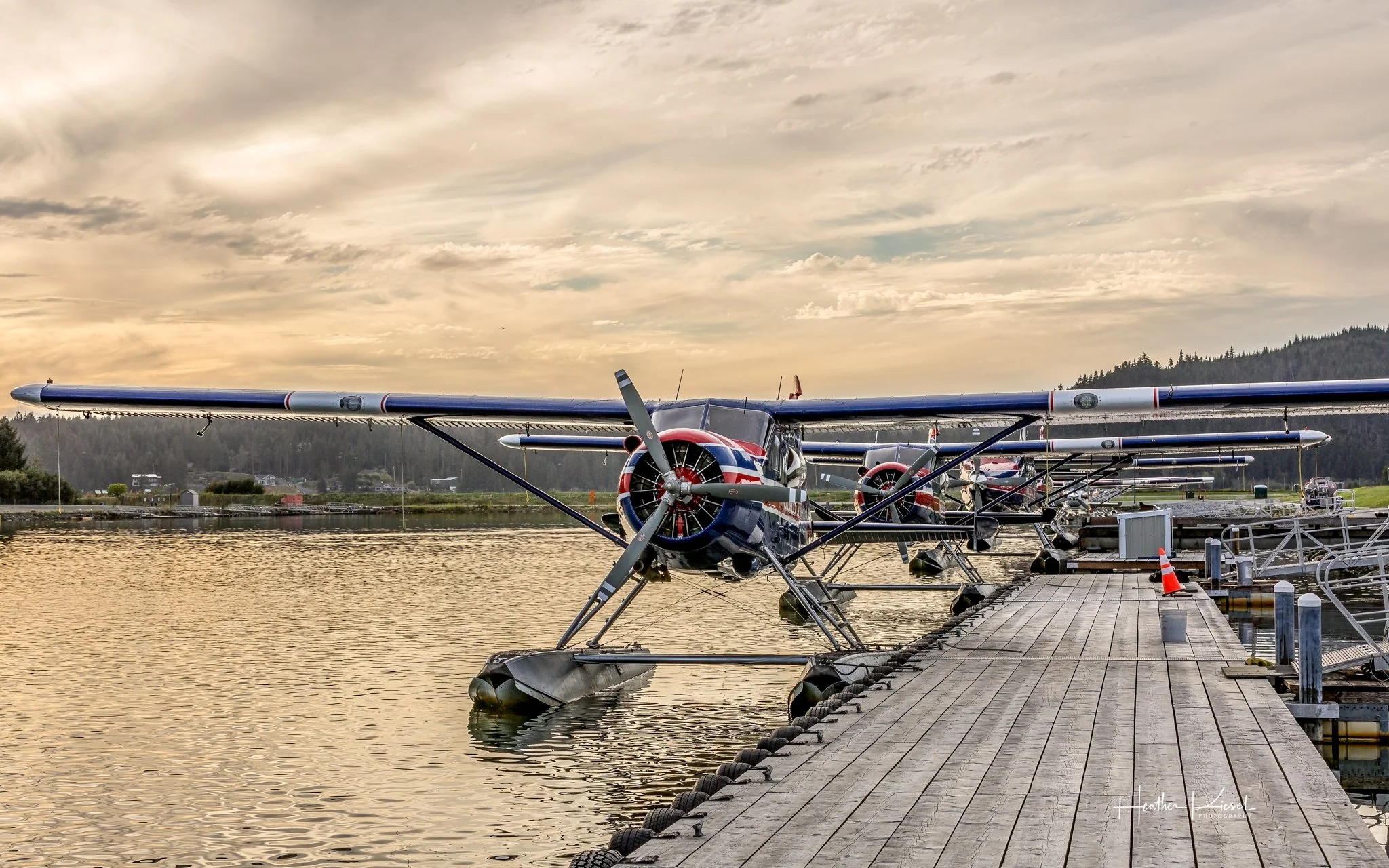
It begins with the sound of a floatplane engine warming against cold Southeast Alaska air — a familiar rhythm echoing across the water and spruce-lined shorelines. The blue and red Ward Air planes sit steady at the dock, floats rocking gently as weather, tide, and light are quietly assessed.
Out here, nothing happens on a strict schedule. Alaska decides first.
For more than five decades, Ward Air Inc has been flying Southeast Alaska’s waterways — delivering people, supplies, and access to places roads will never reach. For me, those flights are the beginning of every photographic adventure I undertake in the wild corners of the Tongass and beyond.
This story is about photography, yes — but more than that, it’s about access, experience, and the quiet partnership between aviation and the wilderness it serves.
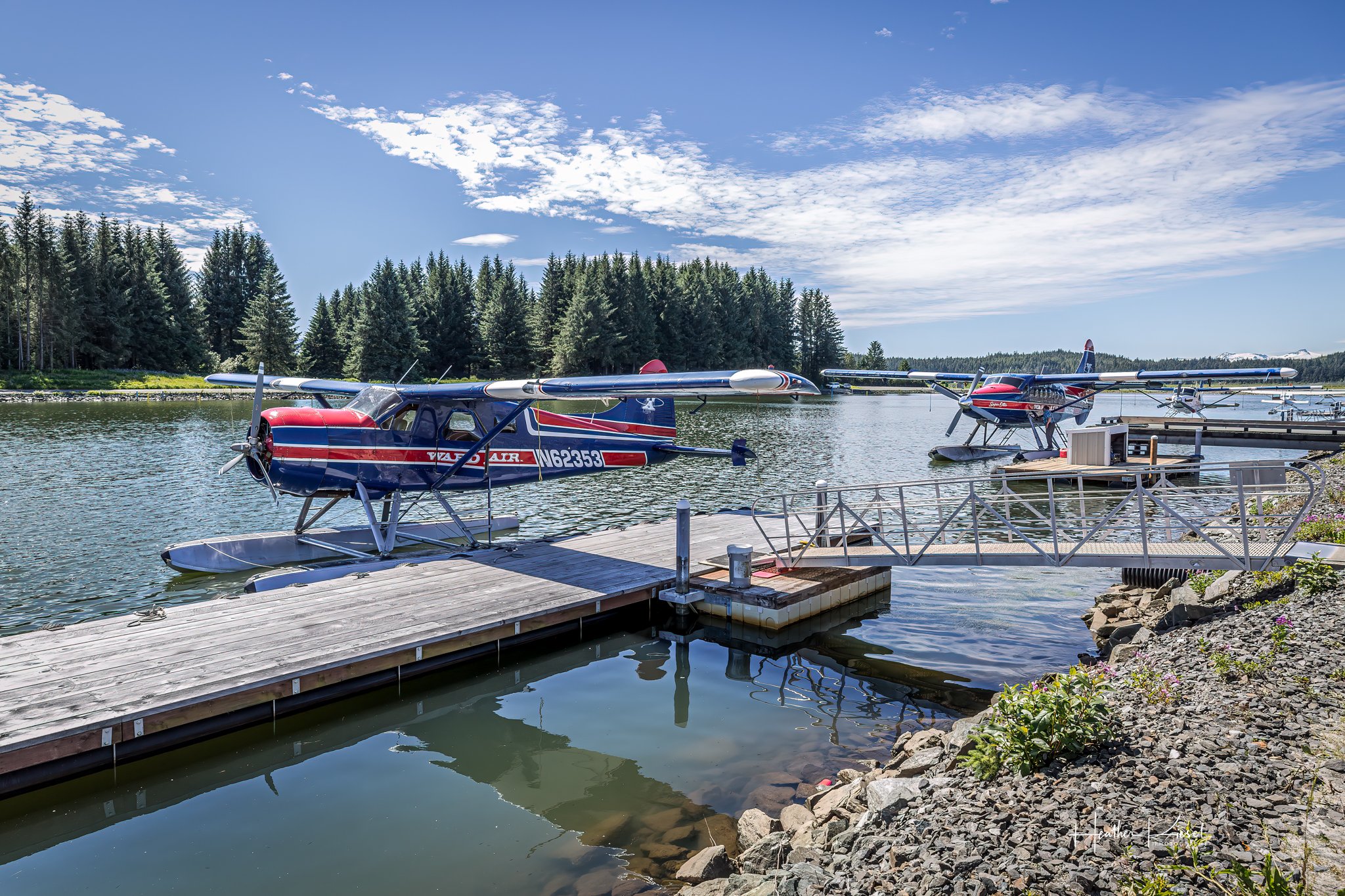
Blue and red Ward Air floatplanes rest at the dock in Juneau, Alaska, ready to depart when weather, tide, and light align.
The Pilot Before the Photograph
Before I lift a camera, I trust the person flying the plane.
My husband, Ed Kiesel, has spent over 40 years reading Southeast Alaska’s skies and waters. Wind direction, cloud ceiling, swell, river levels — these aren’t background details. They are the decision-makers.
A floatplane pilot here doesn’t just transport people. They interpret the land.
Some mornings end before they begin. Weather closes in. Plans change. Other days, the door opens just long enough to slip through. When the floats lift free of the water, there’s no guarantee of what waits ahead — only the understanding that the flight itself is part of the story.
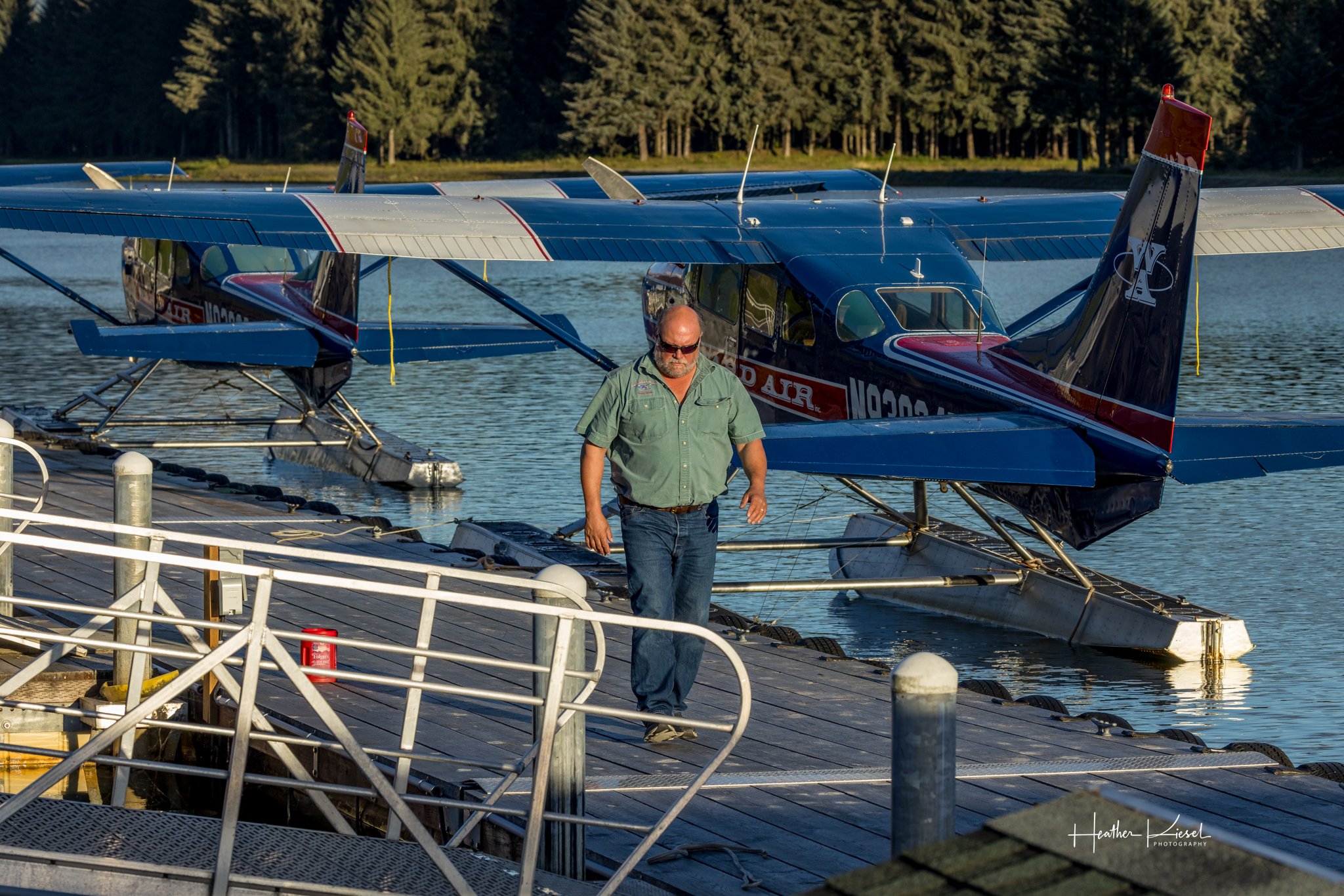
Before I lift a camera, I trust the person flying the plane.
What Flying Teaches a Photographer
Beginner photographers often ask about gear: lenses, camera bodies, settings. Those things matter — but not as much as learning to read conditions.
Flying teaches you that:
• Light is shaped by wind and cloud movement
• Timing matters more than reach
• You don’t always land where you want to — you land where you should
• The decision to turn around is sometimes the most important one you’ll make
When you arrive by floatplane, you don’t rush. Wildlife dictates the pace. Weather determines the window. The plane waits quietly in the background — blue and red against steel water and mossy shoreline — ready when it’s time to leave.
That patience carries directly into photography.
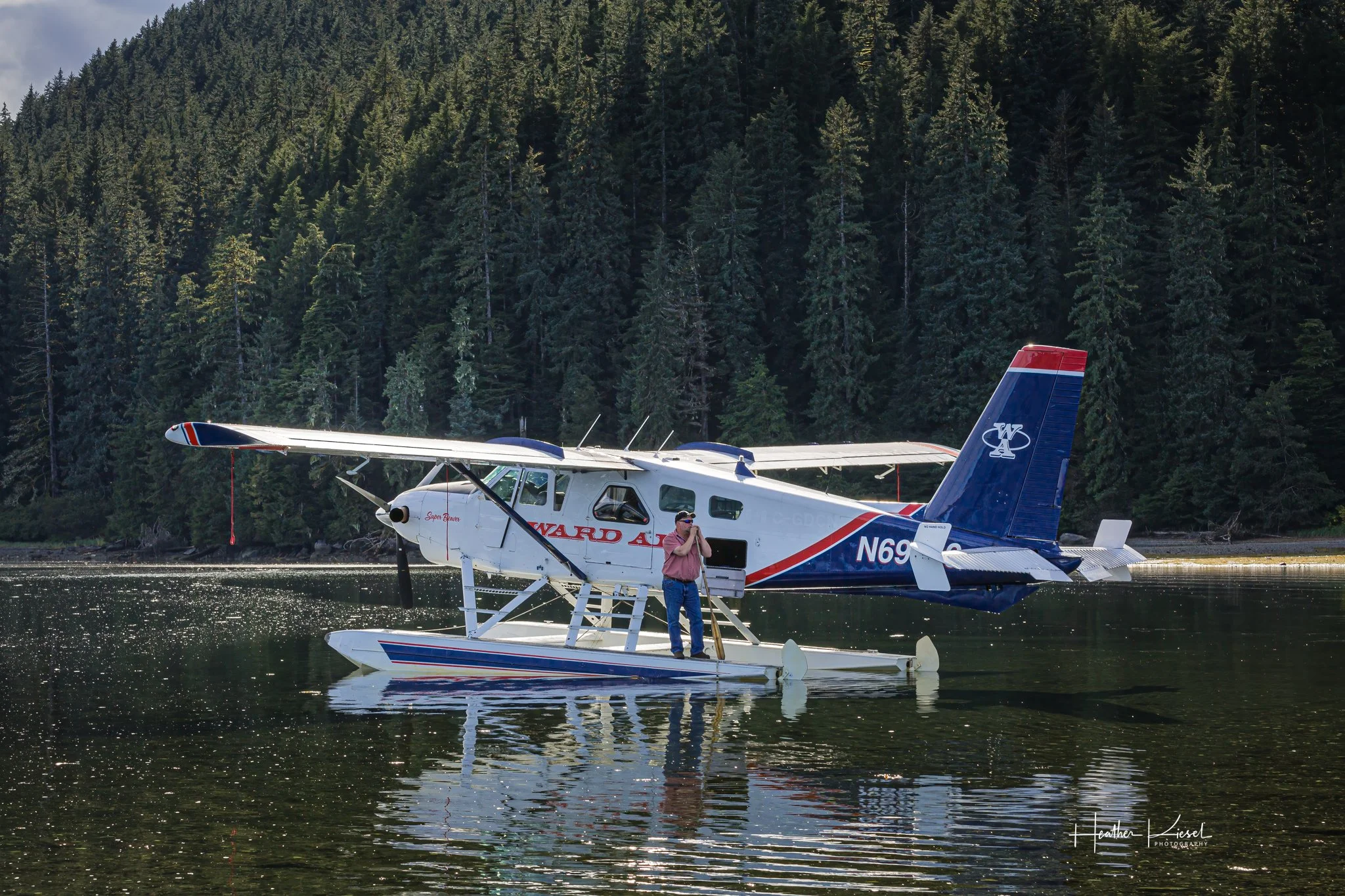
Ed patiently waiting, a reminder that access is only the beginning. In Southeast Alaska, the most meaningful images often come from knowing when to wait, when to step back, and when to let the wild remain undisturbed.
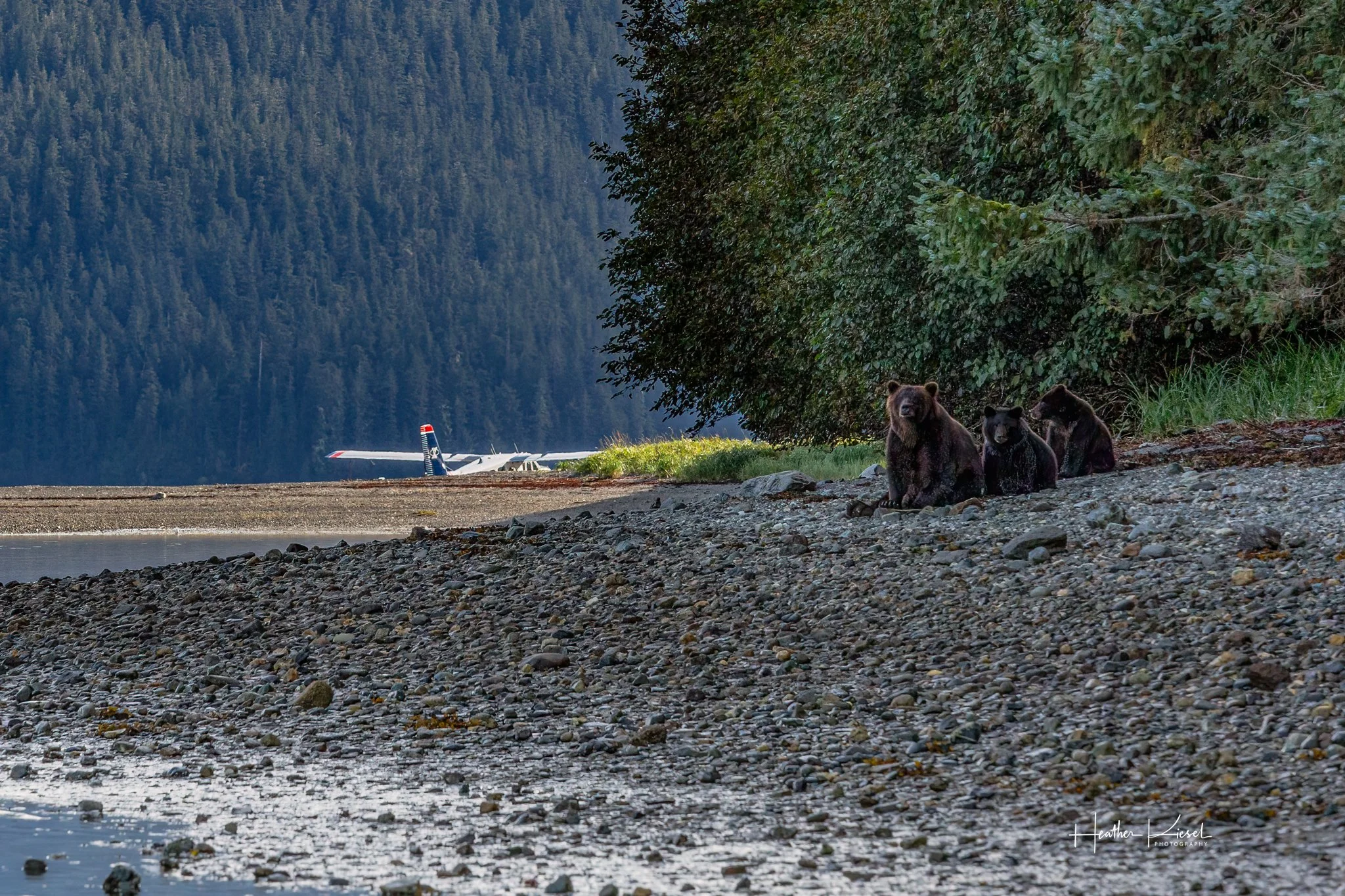
Wildlife Dictates the Pace
Access doesn’t guarantee a photograph.
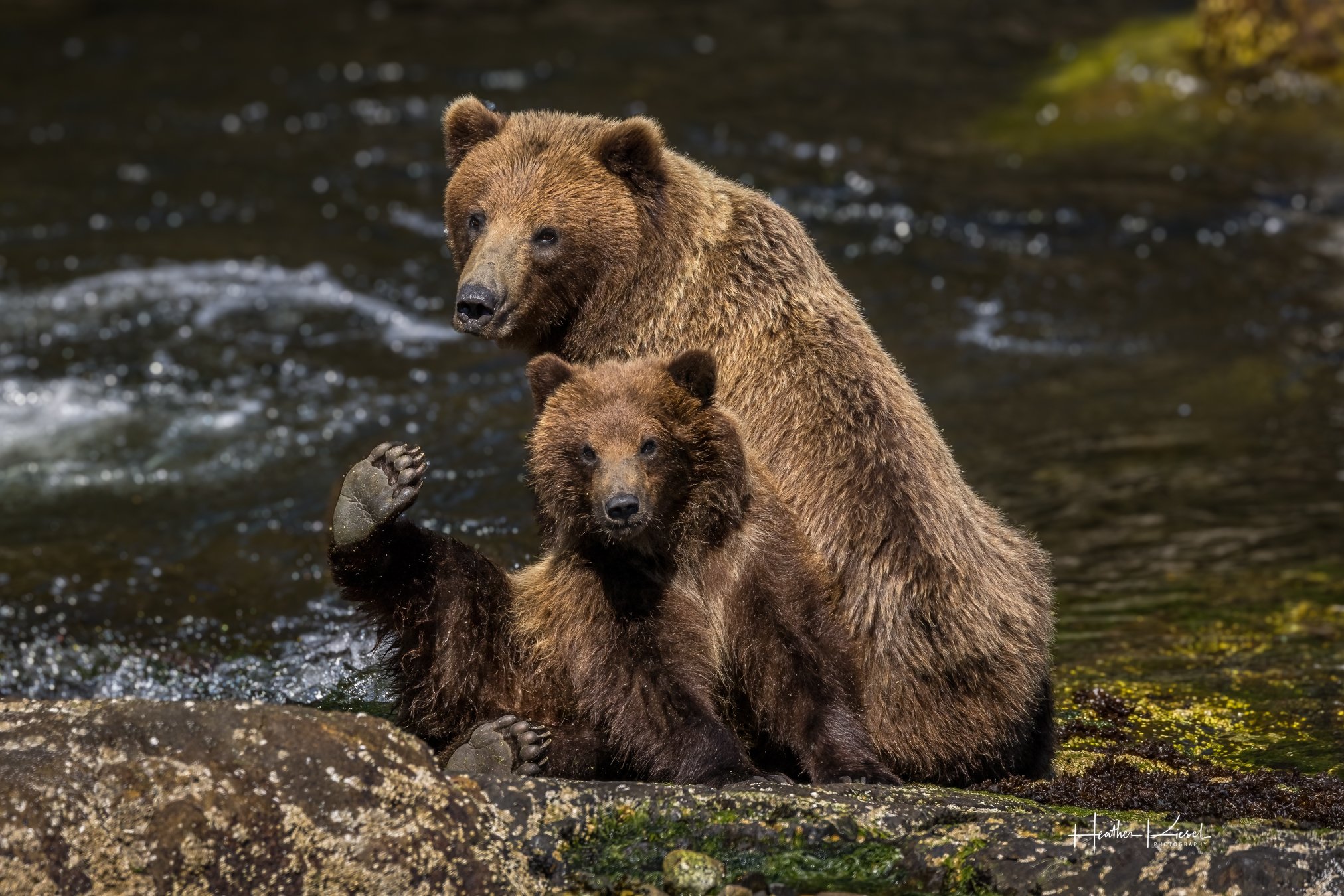
Hiking out along the shoreline to meet the floatplane, the tide was higher than expected. Rounding a corner, we came upon a coastal brown bear mother with two cubs resting quietly ahead — blocking the narrow stretch of beach and leaving no safe way forward.
Rather than push closer and compromise safety for people or bears, we stopped. The pilot waited offshore, engine silent, giving us the time and space the situation required. As the tide slowly dropped, the shoreline widened just enough to allow a safe, respectful route back to the plane.
No images were chased that day. None were forced.
Moments like this define earned photography — where restraint matters more than proximity, and patience becomes part of the story.
The Plane as a Constant
The Ward Air planes appear again and again in my field notes — tied to docks, drifting offshore, lifting into low clouds, waiting out weather. They are steady, reliable, and deeply familiar, just like the landscapes they serve.
For photographers just starting out, this is an important lesson: the most powerful images often come from consistency, not drama.
The same aircraft.
The same pilot.
The same commitment to safety and respect.
Over time, moments unfold.
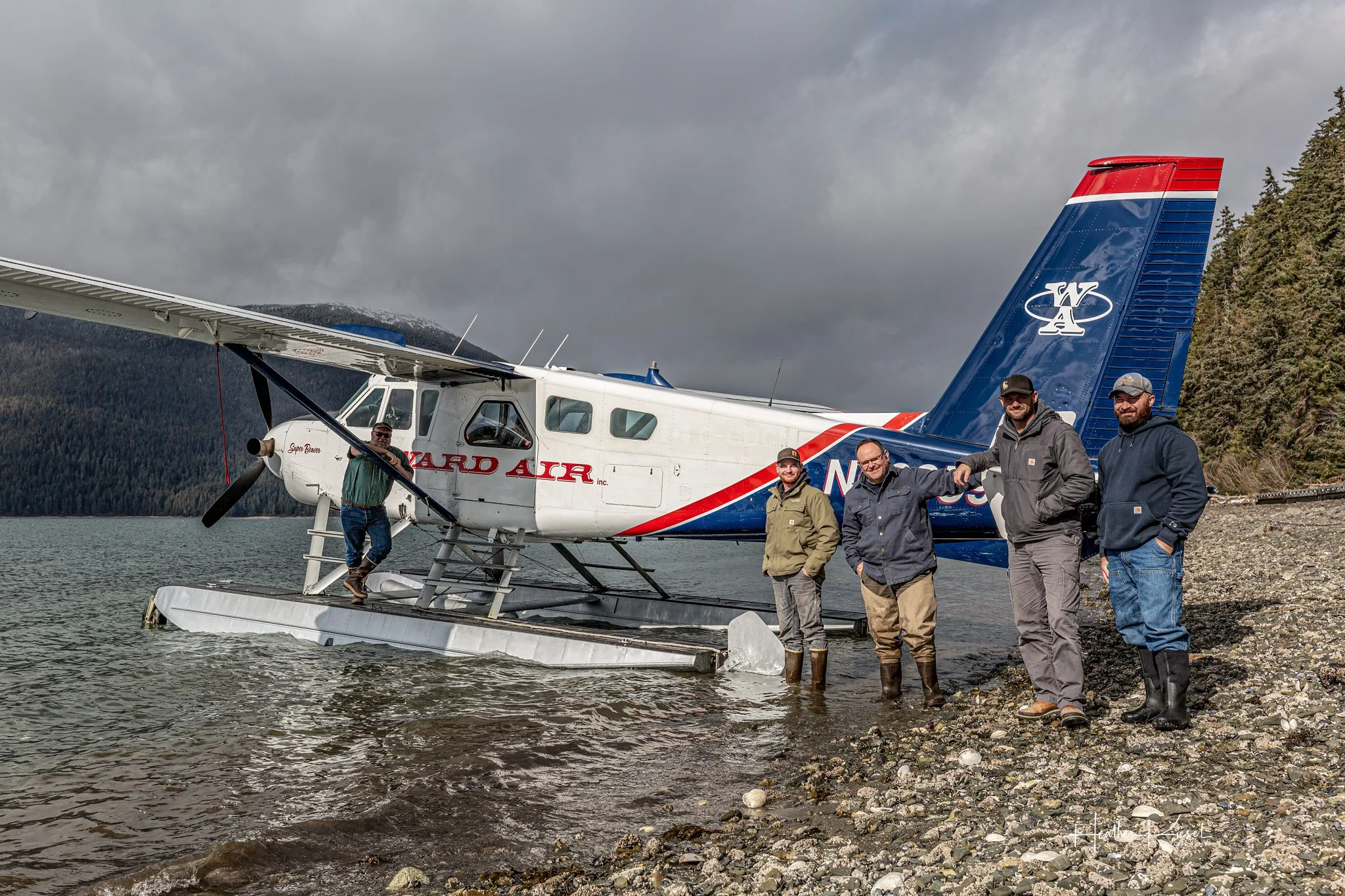
The commitment to safety and respect.
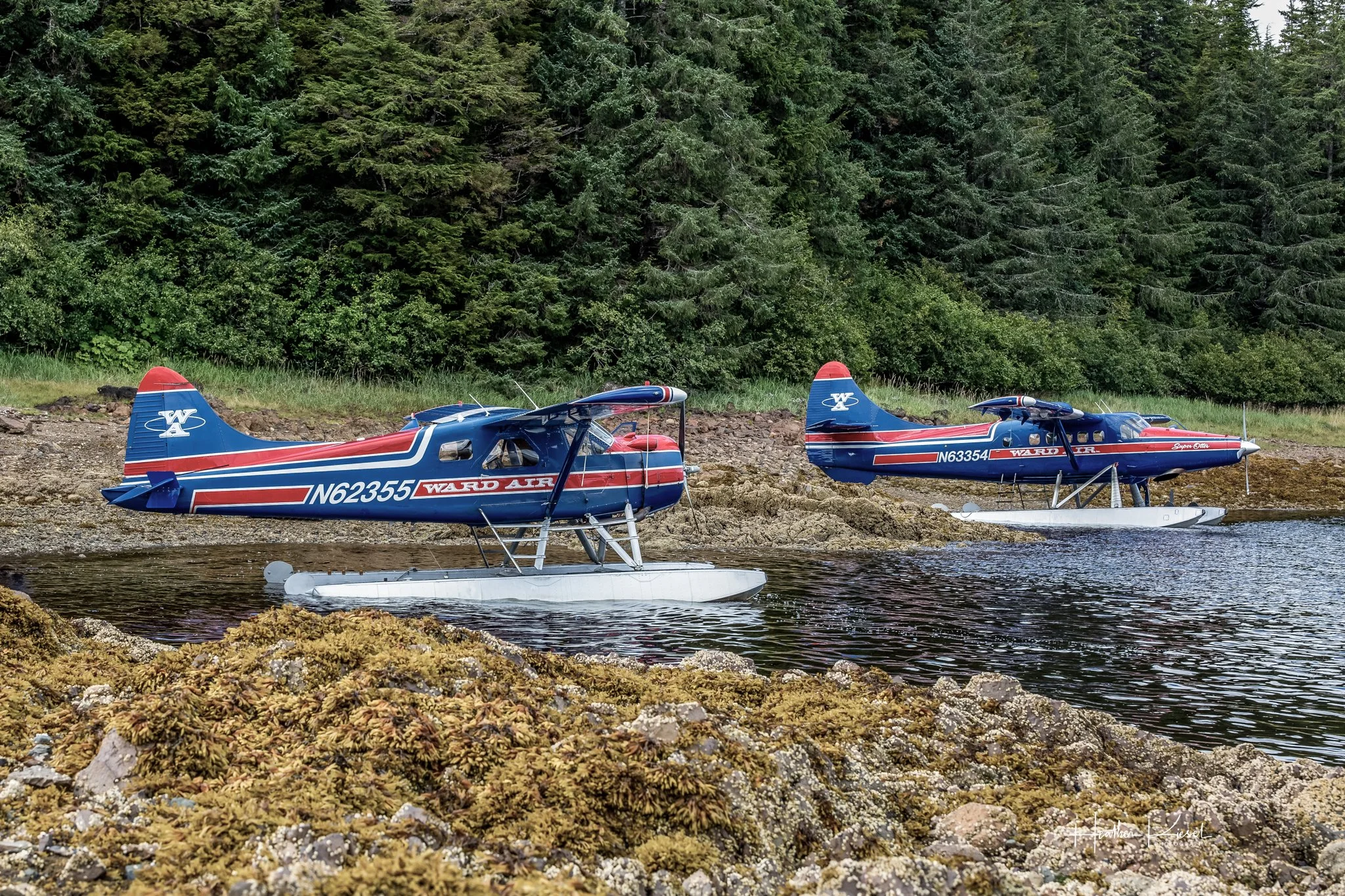
The plane as a constant- steady, reliable, and deeply familiar.
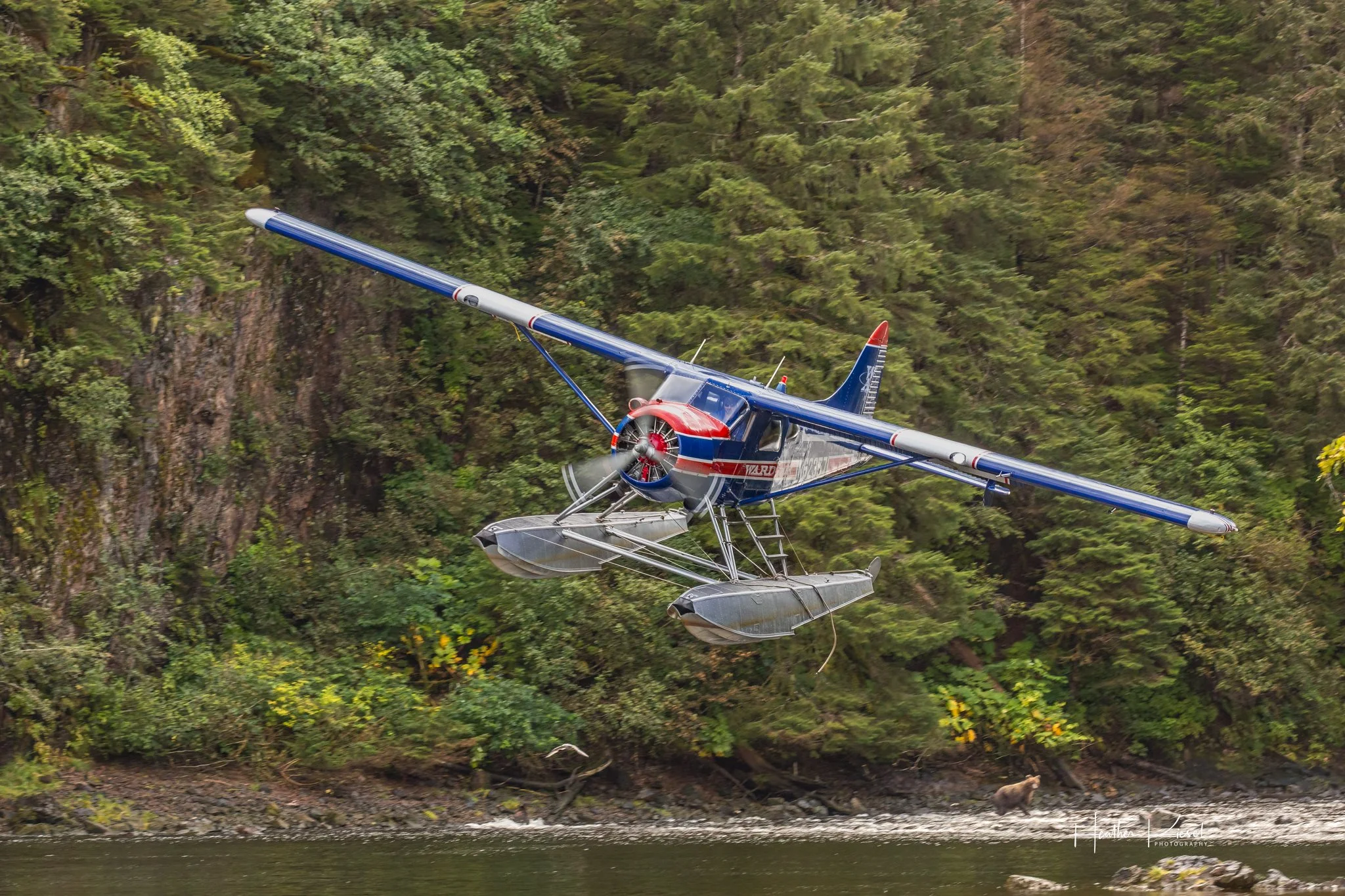
The same pilots.
Photography as Witness, Not Chase
I don’t fly out looking for a single image.
I fly out to witness what happens when conditions align — when bears move into rivers, when light softens across water, when the wilderness allows a brief glimpse into its rhythm. The photograph becomes proof of presence, not conquest.
That mindset changes everything:
• You stop forcing shots
• You stop measuring success by volume
• You begin telling stories instead of collecting images
For those learning photography, this approach builds both skill and trust — with the land, with your subjects, and with yourself.
The Value of Earned Images
Floatplanes stitching together the wild edges of a place where access must be earned
The Value of Earned Images
Many of the photographs available through Heather Kiesel Photography exist because of the flights that came before them. Because someone checked the weather one more time. Because a plane waited. Because a pilot knew when to go — and when not to.
That’s why these images matter to me.
They aren’t just pictures of Southeast Alaska. They are the result of experience, partnership, and a way of moving through the world that hasn’t changed much here — floatplanes still stitching together the wild edges of a place where access must be earned.
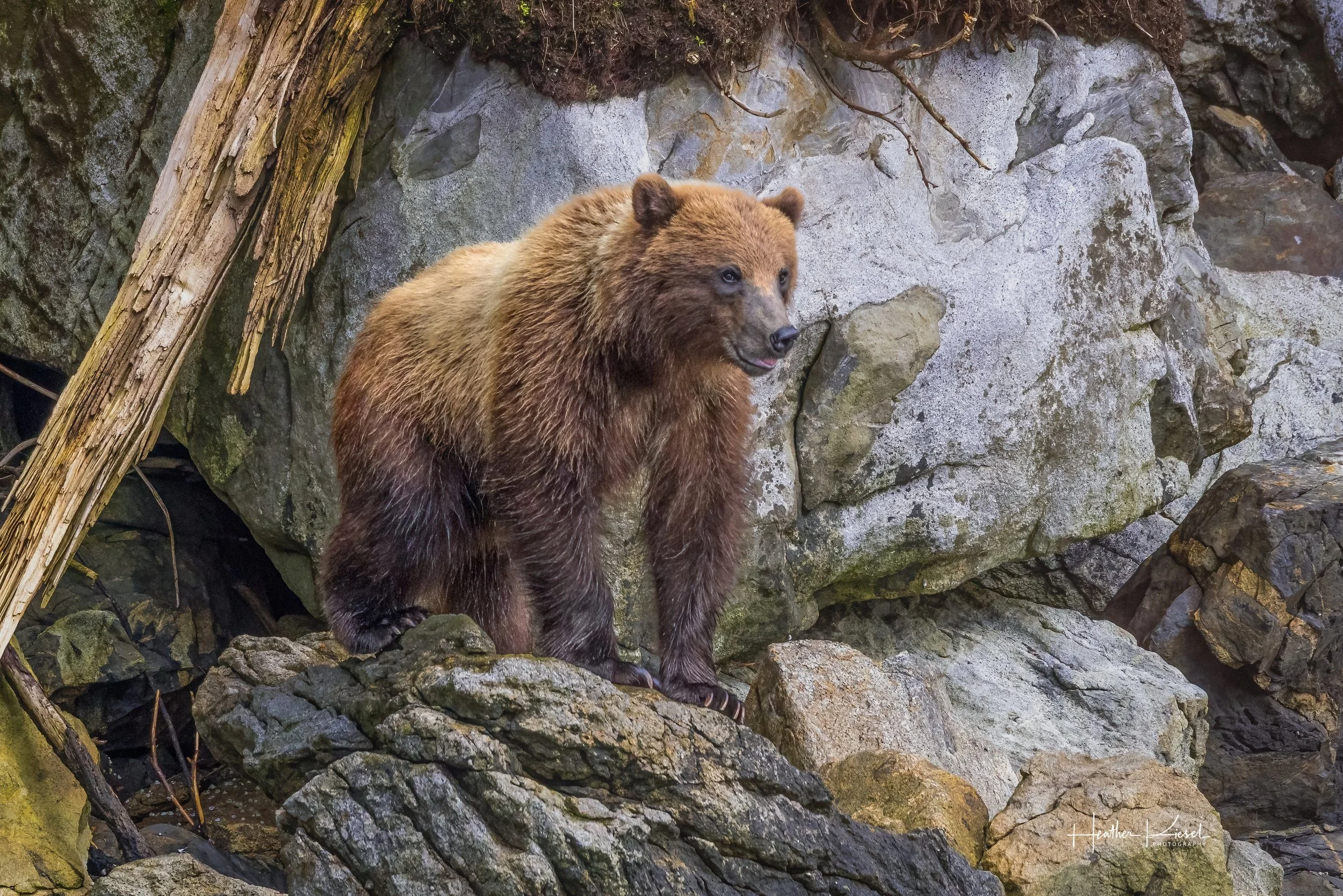
A coastal brown bear stands quietly above a rainforest stream in Southeast Alaska, watching the dark water for the first signs of returning salmon. This is the moment before the feast — when patience, instinct, and survival converge.
Photographed in the Tongass National Forest on Baranof Island, this image captures the calm authority of a bear waiting at the threshold of the salmon run — a timeless ritual that sustains the coastal ecosystem.
Final Notes from the Field
Some days, the plane never leaves the dock.
Some days, it carries us just far enough.
Either way, the story begins there — with a blue and red floatplane resting on Southeast Alaska water, ready for whatever the day allows.